🩷 9 Types Of & Rare Color Climbing Rose Seeds
🩷 9 Types Of & Rare Color Climbing Rose Seeds
🙌Germination in 1-2 weeks
🐀Shipped from Oregon, USA
👍Survival rate as high as 97%
Couldn't load pickup availability
-
Ordered
- - -
Order Ready
- - -
Delivered

🩷 9 Types Of & Rare Color Climbing Rose Seeds







- 💵 Pay via PayPal® Credit Card
- 😍 99.3% of customers purchase the Seven Color Blend to enjoy their beauty.
- ✨ Priority shipping after payment
- ✈ Express worldwide delivery service
About Climbing Roses
Climbing roses are very popular plants in vertical gardens. Interestingly, botanists do not consider them true climbing plants, as they do not grow support structures like vines to attach to surfaces. Therefore, they need external support and vertical space to grow and attach.
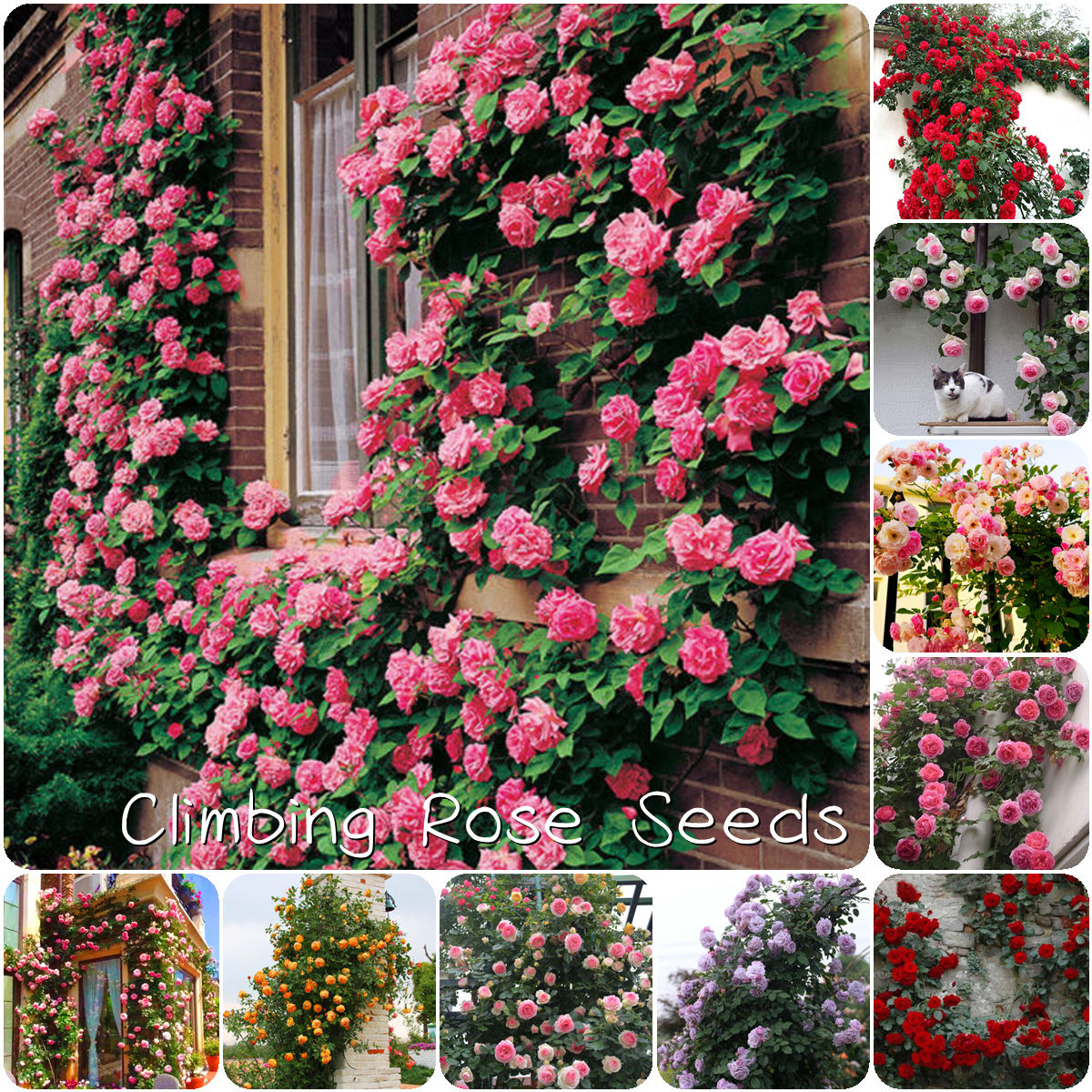
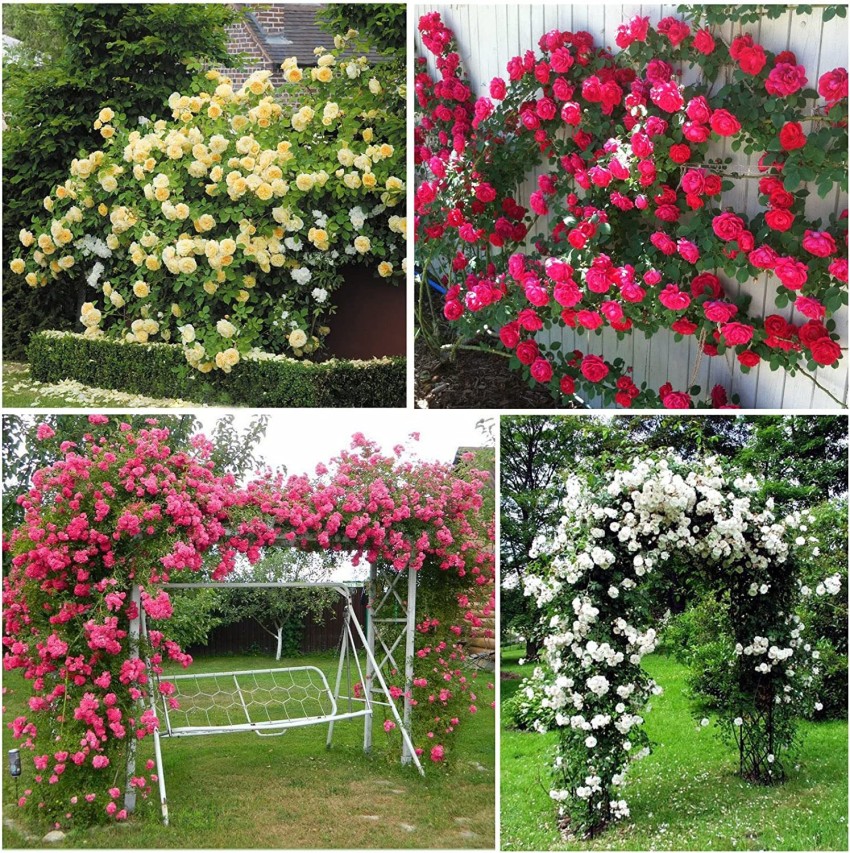
If you want to grow climbing roses, you can choose to purchase a trellis or pergola to provide them with the right growing space. You can also get creative and guide the roses to climb along fences, pillars, garden sheds, or other structures in your yard.
Climbing Rose Details
| Genus Name | Rosa |
| Common Name | Climbing Rose |
| Plant Type | Rose |
| Light | Part Shade, Part Sun, Full Sun |
| Height | 3 to 20 feet |
| Width | 1 to 6 feet |
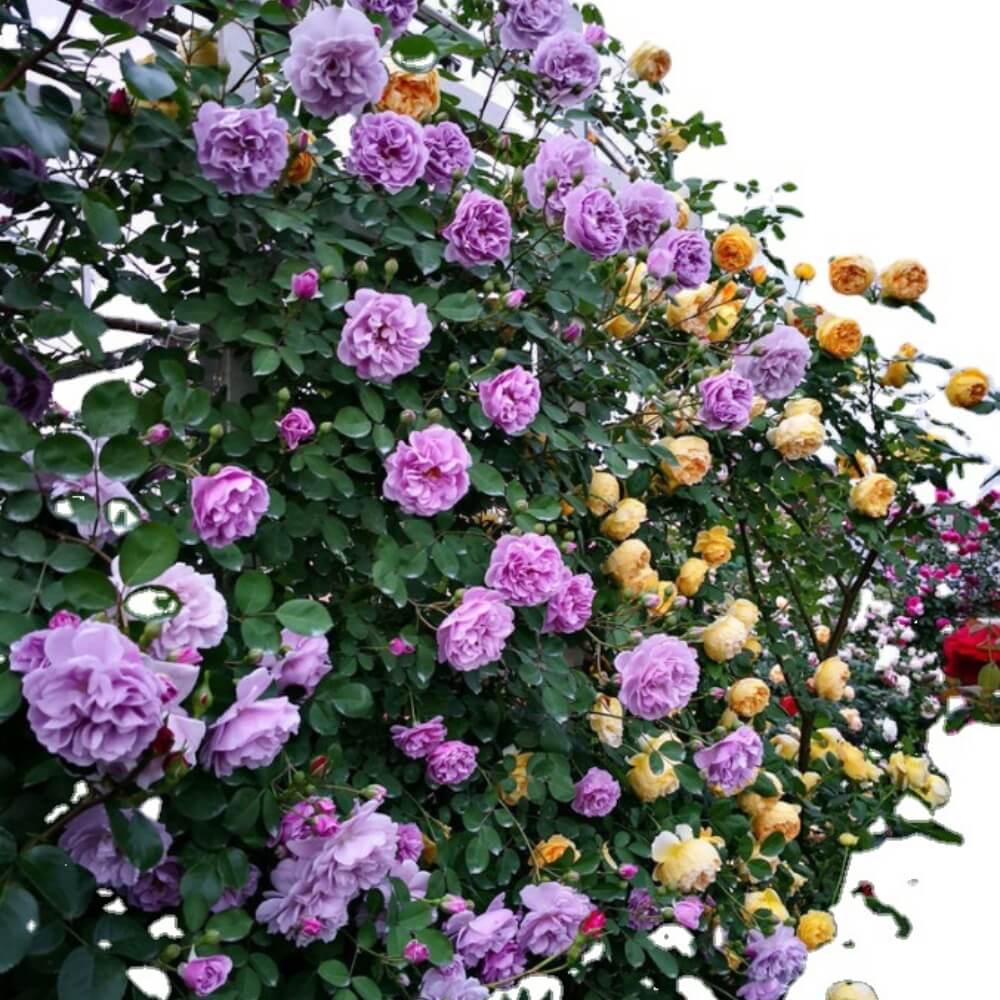
| Flower Color | Water Pink, Red, Light Purple, Yellow, Orange, White, Dark Purple, Deep Red, Sunshine Pink |
| Bloom Time | Summer, Fall & Winter |
| Special Features | Attracts birds, fragrant |
| Zones | 2–11 |
| Germination Time | Approximately 40 days |
| Problem Solver | Deer resistant, good for privacy |
How to Germinate / Grow
How to Germinate Rose Seeds
Growing roses from seed is not the fastest or easiest method of propagation. However, once successful, the sense of achievement far surpasses other methods. Different rose varieties have different growing habits, but the basic method for germinating rose seeds and successfully planting them is straightforward.
Cold Stratification: Cold stratification involves exposing seeds to a temperature of about 35°F (1.7°C). Place the seeds in a folded paper towel moistened with a mixture of half purified water (bottled water) and half bleach, then seal in a bag. If growing multiple types of roses, be sure to label them. Keep the seeds at low temperature for 45 to 60 days.
Once stratification is complete and there is no frost risk, plant seeds using a mix of 50% potting soil and 50% vermiculite, spacing seeds half an inch (about 1.3 cm) apart in a small, shallow tray with good drainage. Place in direct sunlight or under a grow light for 16 hours per day. Water regularly to keep the soil moist.
The third leaf that emerges is the true rose leaf. Once two or more leaves have grown, transplant seedlings into individual 3-inch (7.6 cm) pots. Water with half a teaspoon of Miracle-Gro fertilizer dissolved in 1 quart (950 ml) of water to support growth.
Planting Steps
- Test the seeds — Place seeds in water and discard any that float. Floating seeds may be hollow; heavier seeds that sink have a higher survival rate.
- Choose a container — Purchase a flat container that fits in the refrigerator. Consult a garden center for the best option.
- Prepare the mix — Combine equal parts sand, soil, and peat moss. Garden centers may sell pre-mixed blends.
- Fill the tray — Fill the seed tray with the prepared mix.
- Plant the seeds — Sow each seed about 0.6 cm deep, spacing seeds about 2.5 cm apart.
- Refrigerate — Place the tray in the refrigerator at about 4°C for approximately three months to promote germination.
- Move to light — Remove the tray and place on a sunny windowsill at 18–21°C. Water gently, keeping soil consistently moist but not waterlogged. Transplant the strongest seedlings into the garden the following spring.