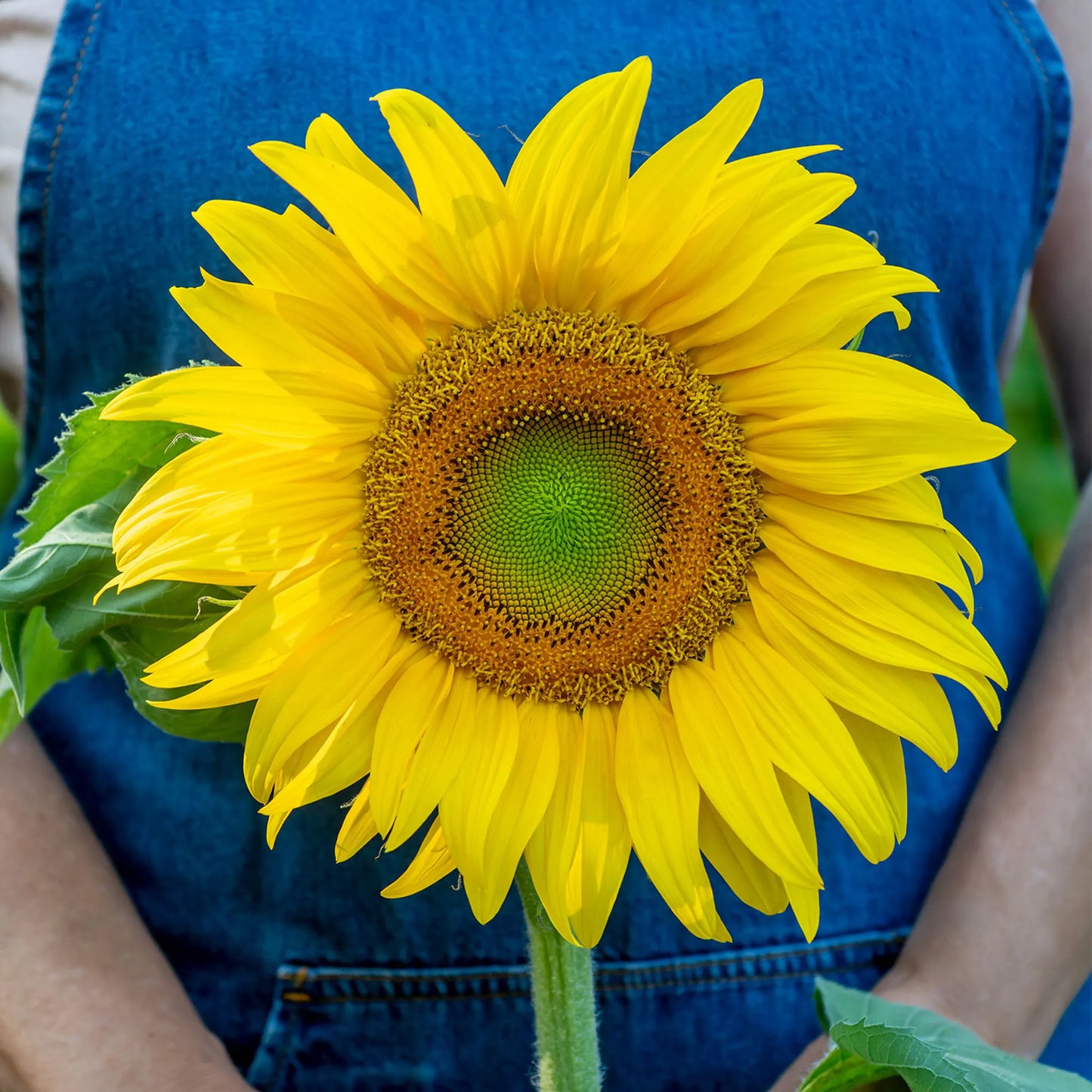
🌻🌻'Sunlight Giant' Sunflower Seeds - Yellow
🌻🌻'Sunlight Giant' Sunflower Seeds - Yellow
🙌Germination in 1-2 weeks
🐀Shipped from Oregon, USA
👍Survival rate as high as 97%
Couldn't load pickup availability
-
Ordered
- - -
Order Ready
- - -
Delivered
🌻Growing Tips For Sunflowers
🌻Growing Tips For Sunflowers
How Do I Cultivate Sunflowers?
To plant sunflowers:
- Space seeds about 6 inches apart in a shallow trench between 1 and 2 inches deep. In sandy soil, 2 inches deep is better.
- Cover and keep watered until seeds sprout in 7 to 10 days.
- When first true leaves appear (the second set of leaves); thin plants to about 2 feet apart.
- Depending on the variety, sunflowers will mature and develop seeds in 80 to 120 days.
- Sow a new row every 2 to 3 weeks to enjoy continuous blooms until the first frost.
For maximum seed production space rows 2 to 3 feet apart. Use traditional, tall, seed-producing varieties such as 'Mammoth' or 'Paul Bunyan Hybrid', 'Aztec Gold Hybrid', or 'Super Snack Hybrid'.
To grow smaller flowers for bouquets, space plants much closer together?about 6 inches apart in Maine, or as close as 2 inches in dry places like Arizona. Skip fertilizing. The plants will be much smaller, with fewer branches, but the stems will be longer and flower heads a good size for arrangements.
Growing Tips For Sunflowers
Sunflower roots spread widely and can withstand some drought. However, it is best to water them regularly during their most important growth period which is about 20 days before and after flowering. Deep, regular watering helps encourage root growth, which is especially helpful with taller sunflower varieties bearing top-heavy blooms.
Sunflowers do not require fertilizing. However, because they grow vigorously (they can easily grow 6 feet in just 3 months), it's a good idea to add some slow-acting granular fertilizer to especially poor, thin soil. The better their diet, the larger the flowers. Do not overdo the nitrogen because that will delay flowering. Spreading a 2- or 3-inch mulch layer of some kind of organic material on the soil will reduce moisture loss through evaporation and discourage weeds.
While a few sunflower varieties do not need any staking, it is a good idea to support plants that grow over 3 feet tall or are multi-branched. Their branches are fairly brittle, especially at the points where they join the stems. Shallow rooted and weighed down with many large flower heads, plants are vulnerable to summer winds and rain. Tie the plants loosely to stakes with lengths of cloth or other soft material as needed.
Birds and squirrels can be a problem when seeds ripen and harvest time approaches. If you do not plan to use the seeds, it is fun to watch wildlife enjoy the bounty. You may want to cut the flower heads off and lay them out in the sun to dry and provide easier access to wildlife. Conversely, to deter birds and squirrels, barrier devices are most effective. As seed heads mature and flowers droop, cover each one with white polyspun garden fleece. It will let light and air in and keep critters out. Also try cutting away the few leaves that are closest to the heads to make it harder for birds to perch and feed. Deer will readily eliminate a sunflower patch. As they favor the new, tender leaves at the top of the plants, a 36-inch chicken wire barrier supported by 6-foot bamboo stakes should keep them at bay. Simply raise the wire as the plants grow.
🌻Learn basic planting knowledge.
🌻Learn basic planting knowledge.
Can I Grow Sunflowers Where I Am?
Sunflowers grow best in locations with full sun. They are remarkably tough and will grow in any kind of soil as long as it is not waterlogged. They do fine in soils that are slightly acidic to somewhat alkaline (pH 6.0 to 7.5). Once sunflowers get started, they can tolerate drought as befits plants whose ancestors grew happily in dry prairie regions. They are so easy to grow that they often plant themselves, springing up unbidden beneath a bird feeder.
Sunflower seeds, leaves and stems emit substances that inhibit the growth of certain other plants. They should be separated from potatoes and pole beans. Where sunflower seeds are regularly used as bird feed, toxins from the accumulated seed hulls eventually kill the grass below. Harmless to animals or people, the toxins eventually biodegrade in the soil.
What Are Some Sunflower Insects & Diseases?
Sunflowers are virtually as care free as their smiling faces suggest. However, they are sometimes infected with fungal diseases such as mildews and rusts. Downy Mildew causes mottling and pale areas on upper leaf surfaces and a fuzzy mold growth on their undersides. Eventually the leaves wither and die. The oldest leaves are usually infected first. Downy mildew is most likely to occur on cool damp nights and warm humid days. It spreads by means of tiny spores carried to plants and soil by wind and rain or transmitted by garden tools. It will not kill a mature plant; it just mars its appearance.
Rust appears on upper leaf surfaces first as yellow or white spots that turn brown or black. Puffy blisters then appear on the undersides. The disease may spread to stems and flowers causing distorted growth. Rust sometimes spreads to the cultivated sunflowers from weeds such as wild mustard, shepherd's-purse, pigweed, and lamb's-quarters.
If fungal diseases are spotted early, spraying with a general garden fungicide as directed on the product label can protect healthy foliage. Remove and destroy seriously infected plants. Keep the area weeded and clean up plant debris from the garden in the fall. Disinfect tools by dipping them in a solution of 1 part household bleach to 4 parts water. Keep your hands clean, and do not handle plants when they are wet.
A small gray sunflower moth sometimes lays its eggs in developing sunflower blossoms. Its larvae are greenish-yellow with 5 brown stripes down their backs. They feed in the flower and destroy seeds, creating a mass of webbing and debris. Pick the worms from the plants and mash them between your fingers or drop them into a plastic bag for the trash. If lots of plants are infested, spray or dust the flowers with a product containing Bacillus thuringiensis (Bt) as soon as you see the larvae. The larvae will eat the bacterium and soon die.

🌻🌻'Sunlight Giant' Sunflower Seeds - Yellow